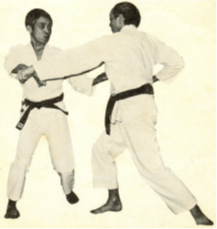
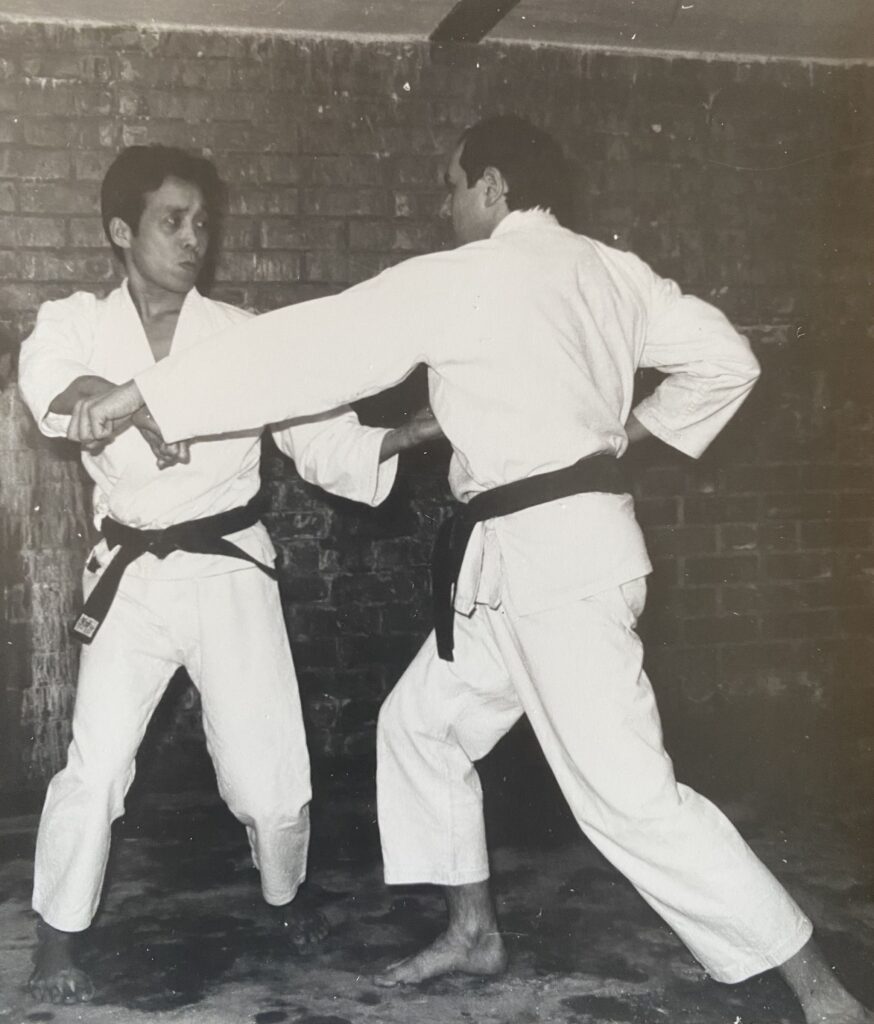
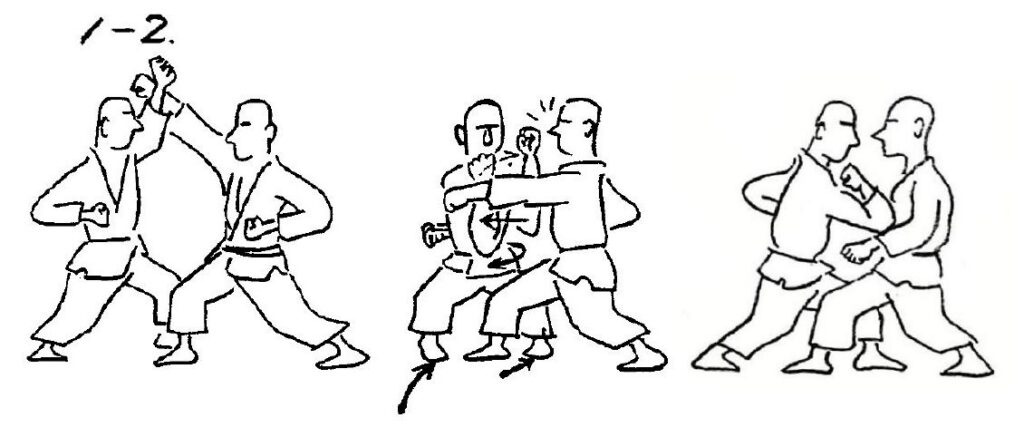
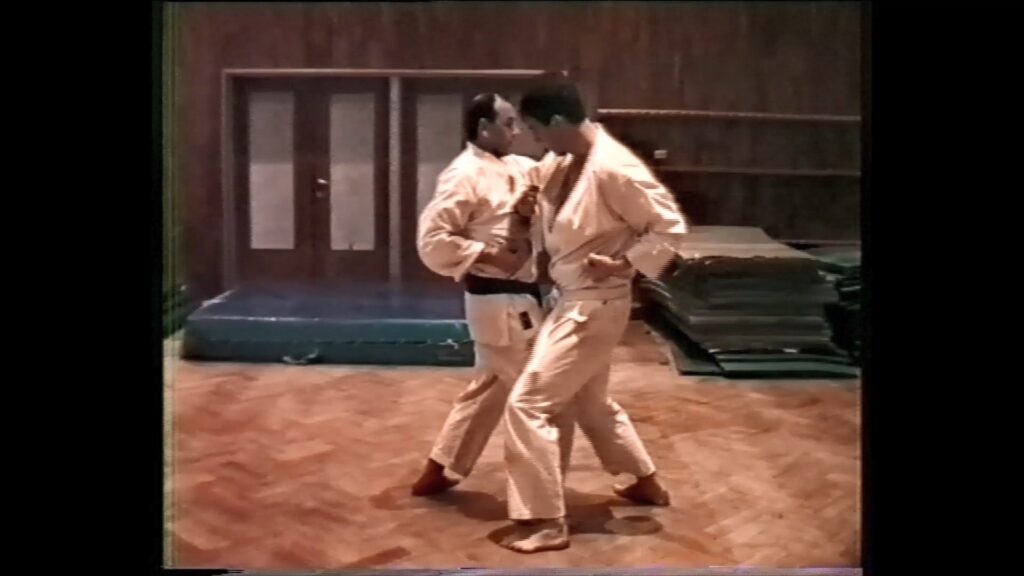
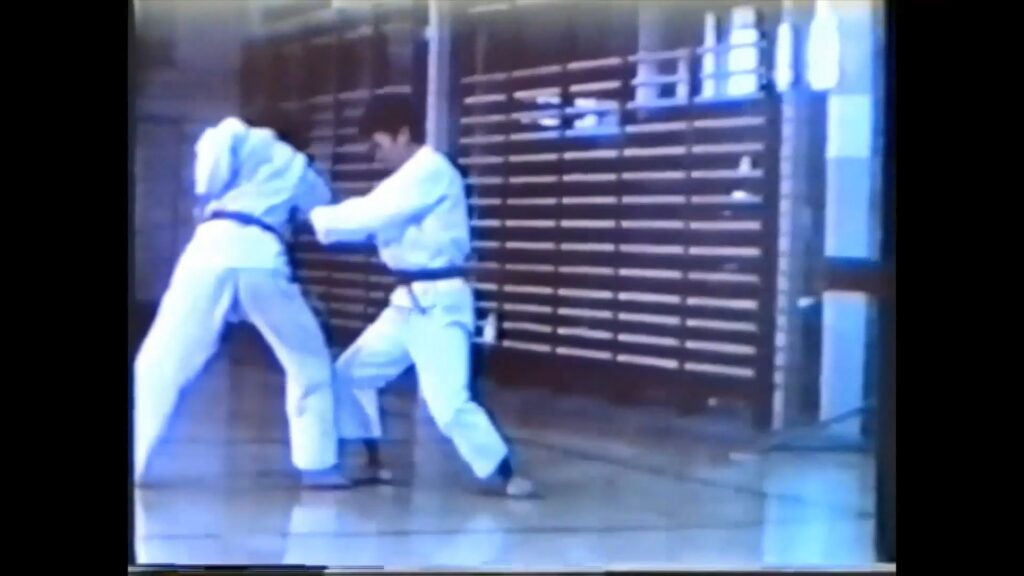
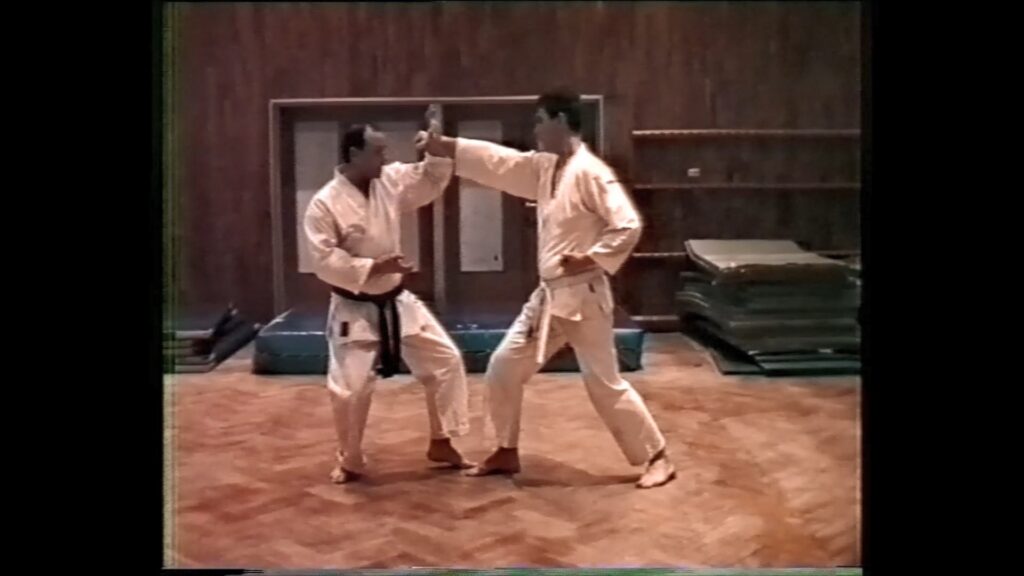
The circumstances surrounding the Budō have changed considerably. In the days when karate was practised in the strictest secrecy, it was difficult to train with fellow practitioners. The Master would often train only one pupil at a time, and training consisted mainly of the diligent repetition of the techniques taught. The Master never lowered himself to his pupil’s level; with a word, or a tap from his pipe or fan, he would correct his pupil’s mistakes; sometimes he would masterfully deliver his instruction by throwing or striking his pupil without giving him the chance to retaliate.
The Ki-Hon and Katas arose from these circumstances; as any other form of training was impossible, they were accorded an importance that may seem exaggerated today; hence, too, maxims such as ‘the Katas are the beginning and the culmination of Karate’.
Times have changed since then.
It is not a question of giving in to the whims of fashion or fleeting fads; but by stubbornly clinging to the perpetuation of ancient customs, the Budôka risks becoming a somewhat anachronistic curio.
If the circumstances in which we live are, in many respects, conducive to the evolution of training methods, we must make the most of them. Training now takes place within a group whose members share inspiration and technique…